



Eco-Conscious Workspaces: Balancing Performance and Responsibility
In the current era, workspace design has a greater purpose of achieving a precise balance between work, well-being, and the safety of our planet. Designing with intention means recognizing that every material and every system we install contributes to our collective ecological footprint.
The modern workplace is evolving into a space where sustainability and human experience coalesce seamlessly, with a subtle yet impactful portrayal of the organization’s values. Creating eco-conscious workspaces is a long-term commitment to designing environments that nurture both people and the planet.
A Deep-Rooted Approach to Sustainability
Sustainable workspace design goes far beyond the basic solutions, like adding a few plants or optimizing daylight. It is a deeper and more systematic approach to creating responsible spaces where the focus lies on mindful consumption and enhanced conservation.
At its core, sustainable design focuses on minimizing waste, reducing energy dependency, and enhancing the health and well-being of people. The design process needs to prioritize long-term performance over short-term convenience, using technology, materials, and strategy as the tools for meaningful change.
Locally Sourced, Globally Responsible
A conscious choice of materials proves to be an essential step in designing sustainable workspaces. Opting for locally sourced, low-carbon materials reduces transportation emissions and supports the local economy.
Natural materials, like bamboo, reclaimed wood, and recycled metal, have comparatively smaller environmental impact and also bring warmth and texture to the workspace. Creating a healthier environment for people who spend the majority of their day inside a workspace is imperative, and incorporating paints, finishes, and adhesives with low volatile organic compounds (VOCs) can help in doing so by enhancing the indoor air quality.
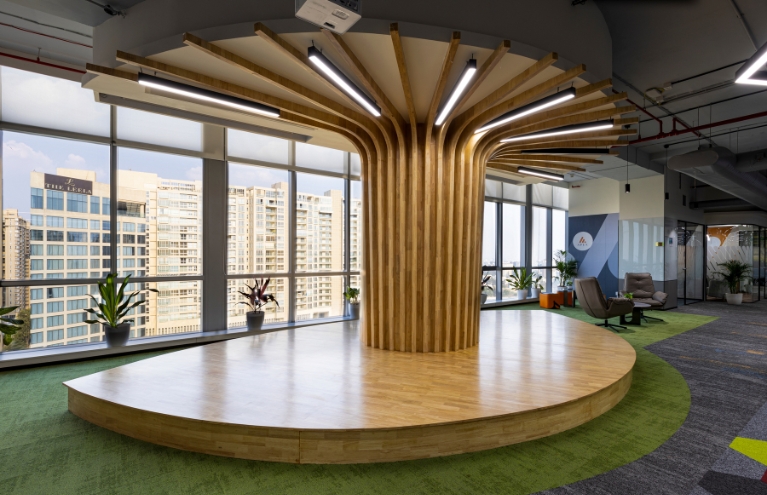
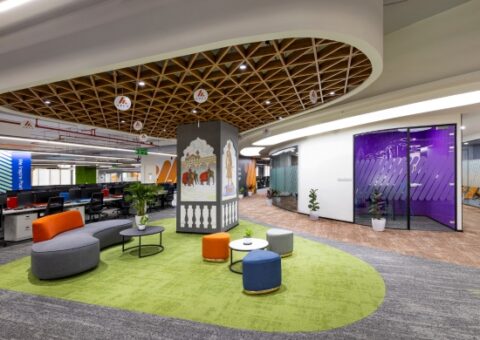
Choosing vernacular materials allows designers to reflect regional identity in their projects, combining global sustainability goals with local culture and craftsmanship. This integration of ecological and cultural responsibility creates workspaces that are sustainable and deeply contextual.
Energy Efficiency guides Intelligent Workspace Design
In India, commercial buildings account for nearly 30% of total energy consumption. Considering such a staggering statistic, the implementation of smart design interventions can create a significant impact:
- Daylight Optimization: Strategically placed windows and skylights reduce dependence on artificial lighting and allow the space to be flooded with abundant natural light.
- Energy-efficient LED systems: Using LED light fixtures and smart lighting sensors can strike the right balance between natural and artificial lighting and ensure energy is consumed only when and where it’s needed.
- HVAC systems: By adapting to occupancy levels and ambient temperature, smart HVAC systems enhance efficiency, maintain comfort, and reduce over-consumption of energy. By integrating IoT-based monitoring systems, workspaces can track real-time energy usage and continuously recalibrate performance.
- Renewable energy sources: The adoption of renewable energy, particularly solar power, is redefining how office spaces operate. Many new-age workspaces in India are now designed with solar panels integrated into the building envelope, contributing to their own energy requirements.
- Water Conservation: Workspaces can significantly reduce water wastage by incorporating motion-sensor taps, low-flow fixtures, and greywater recycling systems, especially in a country where urban water scarcity is a growing concern. Small interventions, like rainwater harvesting plants, can create long-term impacts in saving water resources.
- Waste Segregation: Effective waste segregation systems integrated into design, from designated bins to digital tracking, encourage a culture of accountability. Moreover, shifting towards modular and demountable furniture systems supports the reuse of materials, enabling spaces to evolve without extensive demolition or waste generation.
Compliances and Certifications
For larger organizations, adhering to green building compliances, such as LEED, IGBC, or WELL certifications, becomes a benchmark of credibility. These frameworks encourage the adoption of best practices in sustainable construction, which include efficient water and energy systems, air quality management, and user well-being.
Compliances ensure that sustainability is an ongoing process, embedded into the lifecycle of the workspace. They also offer measurable outcomes, helping organizations to quantify reductions in carbon footprint, energy consumption, and environmental impact.
Designing for a Healthy and Positive Future
Sustainability in workspace design is a crucial revolution. The workplaces of tomorrow need to balance performance with responsibility, integrating technology, empathy, and foresight to create intelligent ecosystems.
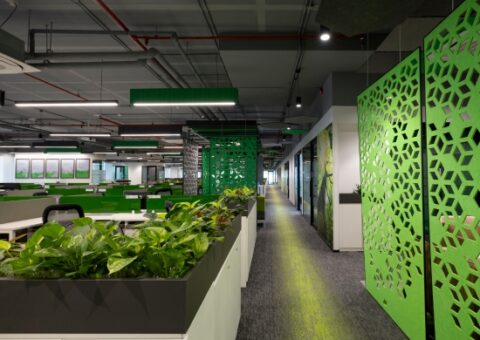
At its heart, sustainability is deeply human. A workspace that’s good for the environment must also be good for its people. Natural light, biophilic design, acoustic comfort, and ergonomic planning enhance physical and mental well-being, directly impacting productivity and satisfaction, because when spaces breathe, people take in a fresh breath too.
At GM Desiign, we see sustainability as the foundation for design innovation. Right from planning and material selection to construction and execution, every decision is a conscious step towards safeguarding the environment and creating meaningful impact.
The true measure of a future-ready workspace is how responsibly it’s built to last, nurture, and inspire!